'Everything changed': The human cost of 25 years of US wars
econews. Twenty-five years have passed since 19 al-Qaeda hijackers seized four commercial aeroplanes and slammed into the World Trade Center and the Pentagon, killing nearly 3,000 people.
What followed was a series of US-led wars that reshaped Washington’s foreign policy for a generation, in which every year since 2001, US forces have bombed a country somewhere in the world, devastating the lives of millions.
“Everything changed,” Omar*, an Iraqi student at the time of the 2003 invasion of Iraq, told Al Jazeera. The war was launched on the false pretence that Iraq harboured weapons of mass destruction.
‘War on Terror’: 4.5 million killed
Less than a month after 9/11, the US invaded Afghanistan, launching what President George W Bush called the “War on Terror” - a series of seemingly endless wars and military campaigns spanning Afghanistan, Iraq and countries across the Middle East, South Asia and Africa.
According to the Cost of War project at Brown University’s Watson Institute for International and Public Affairs estimates that US-led wars since 2001 have directly or indirectly killed an estimated 4.5 to 4.7 million people - including approximately 940,000 direct deaths and 3.6 to 3.8 million indirect deaths from disease, malnutrition and health complications.

Afghanistan: 176,000 direct war deaths
On October 7, 2001, the US launched Operation Enduring Freedom. The Taliban fell within weeks, but the war went on to span nearly 20 years across four US presidents - the longest conflict in US history.
An estimated 176,000 people died as a direct result of the war, according to an analysis from the Costs of War project, while hunger, disease and untreated injuries killed hundreds of thousands more.
Food insecurity rose from 62 percent of Afghans before the war to 92 percent after it, and unexploded ordnance and landmines continue to kill and maim civilians.
In 2021, the Taliban regained control of Afghanistan.
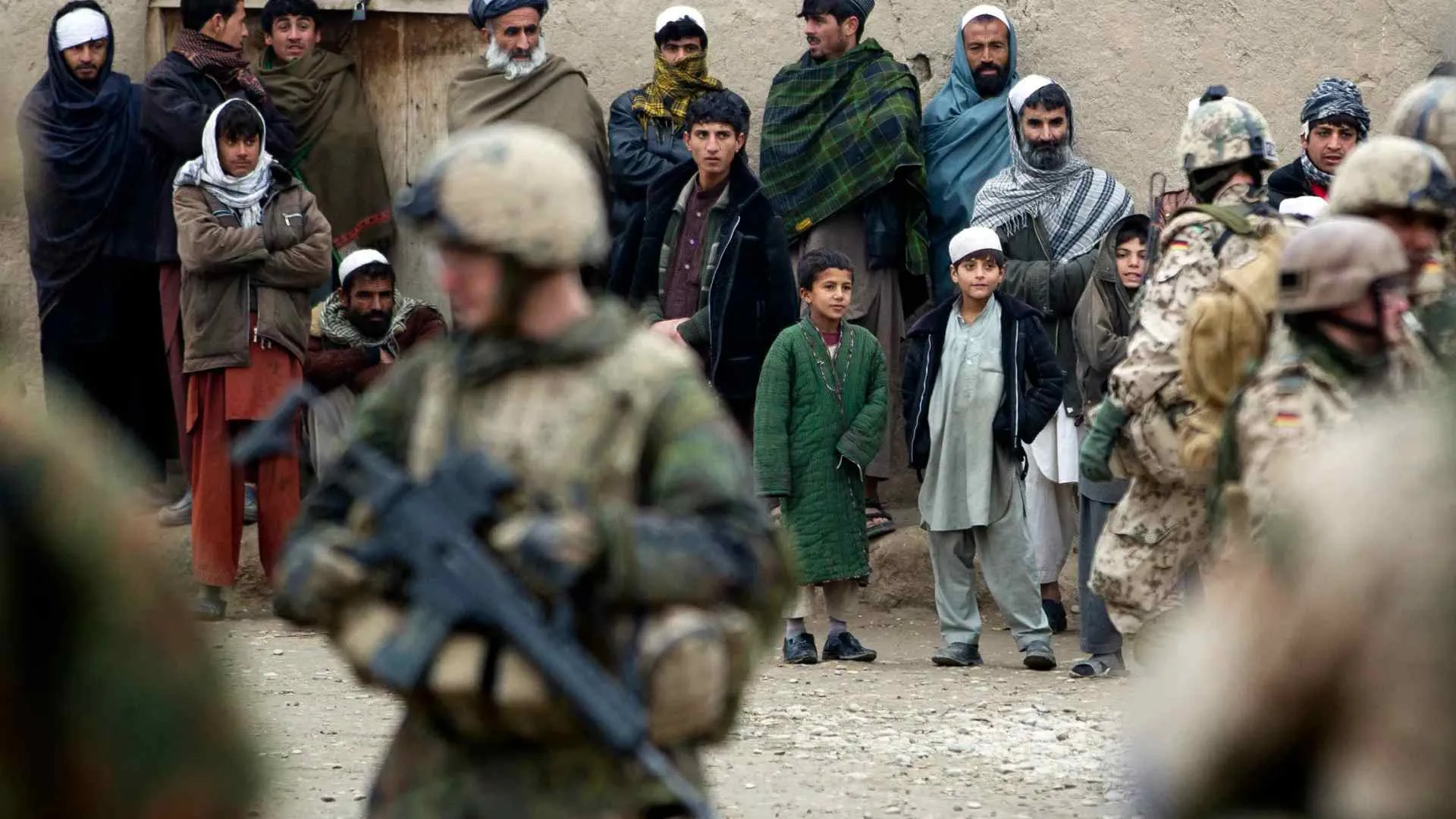
![In this Jan. 28, 2012 file photo, U.S. soldiers, part of the NATO- led International Security Assistance Force (ISAF) patrol west of Kabul, Afghanistan. [Hoshang Hashimi/AP Photo]](https://www.aljazeera.com/wp-content/uploads/2026/09/AP21046456203732-1789054433.jpg?w=770&quality=80)
Iraq: 315,000 direct war deaths
Less than two years later, on March 19, 2003, the US launched its invasion of Iraq.
Omar was 18 years old when the Iraq war began. “We remember the sounds [of the bombs]; we were very afraid,” he told Al Jazeera.
Omar recalls how some of his friends went to see what was happening as the war reached Baghdad, despite warnings that it was too dangerous. “I told them, why are you going?” he says. “Then they went, and they didn’t come back. It’s very sad when we remember.”

Air campaigns and drone wars

Alongside the ground wars, the US conducted largely undeclared air and drone campaigns in Pakistan, Yemen, Somalia, Afghanistan and against ISIL in Iraq and Syria.
Since 2004, the Bureau of Investigative Journalism has recorded:
- 423 US strikes in Pakistan, killing an estimated 2,499–4,001 people, including 424–966 civilians
- In Yemen, it recorded at least 186 strikes and raids, killing at least 853 people, including 158 civilians
- In Somalia, 19–23 strikes between 2001 and 2016 killed 188–276 people

In 2011, during a crackdown on protests in Libya under Muammar Gaddafi, US and NATO led an air campaign under a UN mandate to protect civilians. Over seven months, there were nearly 9,700 strikes launched on the country before Gaddafi was captured and killed by rebel fighters, according to Amnesty International.
In 2014, the US-led campaign against ISIL in Iraq and Syria, known as Operation Inherent Resolve, involved a strong air and ground campaign involving tens of thousands of bombs.
By 2018, the destruction and loss of life was significant, while officials acknowledged 1,417 civilian deaths, Airwars, a London-based nonprofit that tracks civilian harm from military operations, estimates the true toll at between 8,264 – 13,360.
![People gather during the mass burial of people whom activists say were killed by forces loyal to Syria's President Bashar al-Assad, in Artouz, near Damascus, August 1, 2012. [Shaam News Network/Reuters]](https://www.aljazeera.com/wp-content/uploads/2026/09/2012-08-01T120000Z_658195399_GM1E8820ARG01_RTRMADP_3_SYRIA-CRISIS-1789054987.jpg?w=770&quality=80)
More than 38 million displaced
The Costs of War estimates that more than 38 million people across Afghanistan, Iraq, Pakistan, Yemen, Somalia, the Philippines, Libya and Syria have been displaced by the post-9/11 wars, either abroad or within their own countries.

More than two decades on, people are still being forced from their homes.
Last year, Iran and Pakistan pushed roughly 2.9 million Afghans back across the border. In Iraq, more than a million people remain displaced two decades after the invasion.
Ayesha*, a 40-year-old Afghan mother, has spent much of her life moving between Afghanistan and Iran after repeated displacement. Her family first fled Afghanistan in 1994, returned in 2000, and fled again in 2002 after the US invasion. After living in Iran for 11 years, she and her children were expelled and forced to return to Afghanistan.
“I went and came back many times. This last time, we were there for 11 years - but then the Iranians kicked us out and expelled my children from school,” Ayesha said.




- 1 The World’s Energy Jugular: Why the Strait of Hormuz Remains the Most Strategic Waterway on Earth
- 2 XRP, Bitcoin, Ethereum and Solana Are All Up More Than 20% in a Month
- 3 Rising tensions reshape the Middle East across the region
- 4 Did Iran capture a US submarine? What we know about the underwater drone
- 5 Results of US envoys’ visits and EU speculations: Putin-Trump phone call