 EU opens antitrust probe into Coca-Cola bottler over cross-border trade
Bernie Sanders Opposes Schumer as Majority Leader
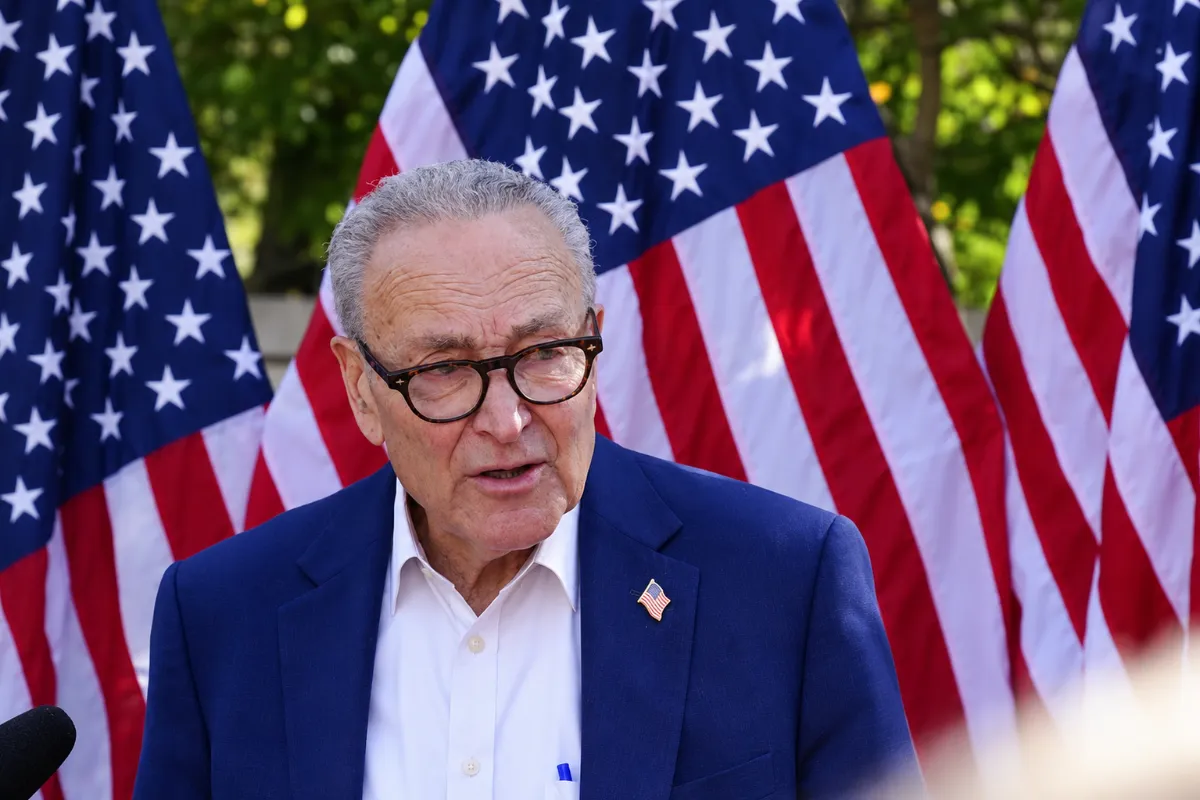
econews . The progressive leader was among a few Democrats who signaled skepticism about Senator Chuck Schumer of New York, though his allies offered support and called for party unity.
econews. Opposition to Senator Chuck Schumer’s return as party leader burst into the open on Capitol Hill on Tuesday as Senator Bernie Sanders said he would not support him and other Democrats questioned whether he should remain at the top after their huge wins last week.
“If this campaign was about anything, it was about change, and the need for the Democratic Party, in my view, to move in a new and bold direction,” Mr. Sanders, a progressive Vermont Independent who aligns with Democrats, said at a news conference following a private party meeting. “I will not be supporting Chuck to be re-elected as the Democratic leader.”
Despite Mr. Schumer serving as the architect of an extraordinary Democratic victory that could end up gaining the party as many as nine seats and the Senate majority, he has run into resistance from progressive groups.
In addition, some of the newly elected Democrats have said they would not support him and called during their campaigns for a new approach to leadership. But Mr. Sanders was the first of the current membership to break with Mr. Schumer and do so in such a public way.
He was then joined by Senator Elissa Slotkin of Michigan, who called for a broad discussion about who should lead Senate Democrats and said they should withhold their votes from Mr. Schumer until he presents a “concrete plan” for “how they’re going to govern differently.”
Mr. Schumer’s election — which requires only a majority of Democratic senators — has appeared to remain firmly on track despite resistance from progressive activists who have long called him too old and too moderate to continue as the leader. His aides say he has secured commitments to vote for him from well over half of the Democratic caucus ahead of a private vote scheduled for next month.
No one has stepped forward to challenge Mr. Schumer for the post, though Senator Chris Van Hollen, Democrat of Maryland, has indicated some openness to running. On Tuesday, he offered some of his sharpest criticism yet of the Democratic leader for interfering in primary contests against some of the Democrats who eventually won.
“We have two members in that room, newly elected senators, who would not be there if Schumer and the DSCC had had their way,” Mr. Van Hollen said at an event in Washington, referring to the Democratic Senatorial Campaign Committee. He appeared to be referring to Abdul El-Sayed of Michigan, who beat Mr. Schumer’s preferred candidate, Representative Haley Stevens, in a primary, and Troy Jackson of Maine, who was nominated after Mr. Schumer’s recruit in that state, Gov. Janet Mills, dropped out when her bid failed to gain traction.
Asked about whether he would challenge Mr. Schumer, Mr. Van Hollen said he was “actively listening” and “actively calling his colleagues” about it.
But one Democrat who attended the closed-door meeting on Capitol Hill said there was no evidence of a groundswell against Mr. Schumer, who has led the party since 2016, and that Mr. Sanders was the sole member who directly challenged him.
At Mr. Schumer’s regular weekly news conference on Tuesday, three allies stood with him and offered unwavering support as well as some astonishment that the party would consider replacing him after the election sweep that he was central to accomplishing through candidate recruitment and fund-raising.
“That takes vision, it takes clarity of thought, it takes strategic leadership and that is what Senator Schumer has done,” said Senator Kirsten Gillibrand, his fellow New Yorker who served as head of the party’s Senate campaign operation. “And that is why you will see, despite all the grumblings: enormous gratitude for the hard work he has done to get us to this position.”
She was joined by Democratic Senators Sheldon Whitehouse of Rhode Island and Ruben Gallego of Arizona, who both said they were backing Mr. Schumer.
“It’s time for us to unify,” Mr. Gallego said. “We’re going to work together as a caucus to put a plan together about how to move forward for what the country wants us to do, and I think, you know, we have the person that’s going to lead us there.”
Mr. Schumer said that he was confident he would be elected majority leader.
Mr. Sanders and Ms. Slotkin both ruled out seeking the job. Ms. Slotkin, who has been in the Senate for two years and is widely considered to be eyeing a 2028 presidential run, said she wanted to see a “fulsome conversation” about the party’s direction.
“I think whoever wants to run this caucus should come forward with a plan on how they’re going to govern differently,” Ms. Slotkin said. “What they’re going to do in the first 100 days to put money in people’s pockets and then, in particular, how they’re going to communicate differently.”
She and Mr. Sanders said they wanted to see plans on general affordability, access to health care and the future of artificial intelligence.
Ms. Slotkin said she had a “productive conversation” with Mr. Van Hollen, who was in the Democratic leadership when he served in the House and also directed party campaign organizations in both the House and Senate.
Asked to explain why no one had announced a challenge to Mr. Schumer, Mr. Sanders said that taking on the leadership “is not something that is easily done. And Chuck, over the years, has made a lot of friends and developed a lot of alliances.”
Carl Hulse is the chief Washington correspondent for The Times, primarily writing about Congress and national political races and issues. He has nearly four decades of experience reporting in the nation’s capital.
EU opens antitrust probe into Coca-Cola bottler over cross-border trade  European firms warn EU leaders against cuts to Competitiveness Fund
 Xi’s greatest power is what he chooses not to do
Comment



Most Read
- 1 Pakistan rejects India's move to hold Indus Waters Treaty in abeyance at UN
- 2 EU readies fresh sanctions on Russia amid 'absurd' demands and winter strikes
- 3 EU plans a new €45bn loan to Ukraine. How much will it cost? And will it be repaid?
- 4 ‘Peace through strength’: Albanese and Trump hail progress on Quad alliance
- 5 Kyrgyzstan sees foreign trade rise to $14.1bln in January-September 2026