 Loss of 1b barrels due to Iran war will slow oil market recovery, Aramco CEO warns
 Strait of Hormuz closure shakes Europe: Oil price forecast soars 46%
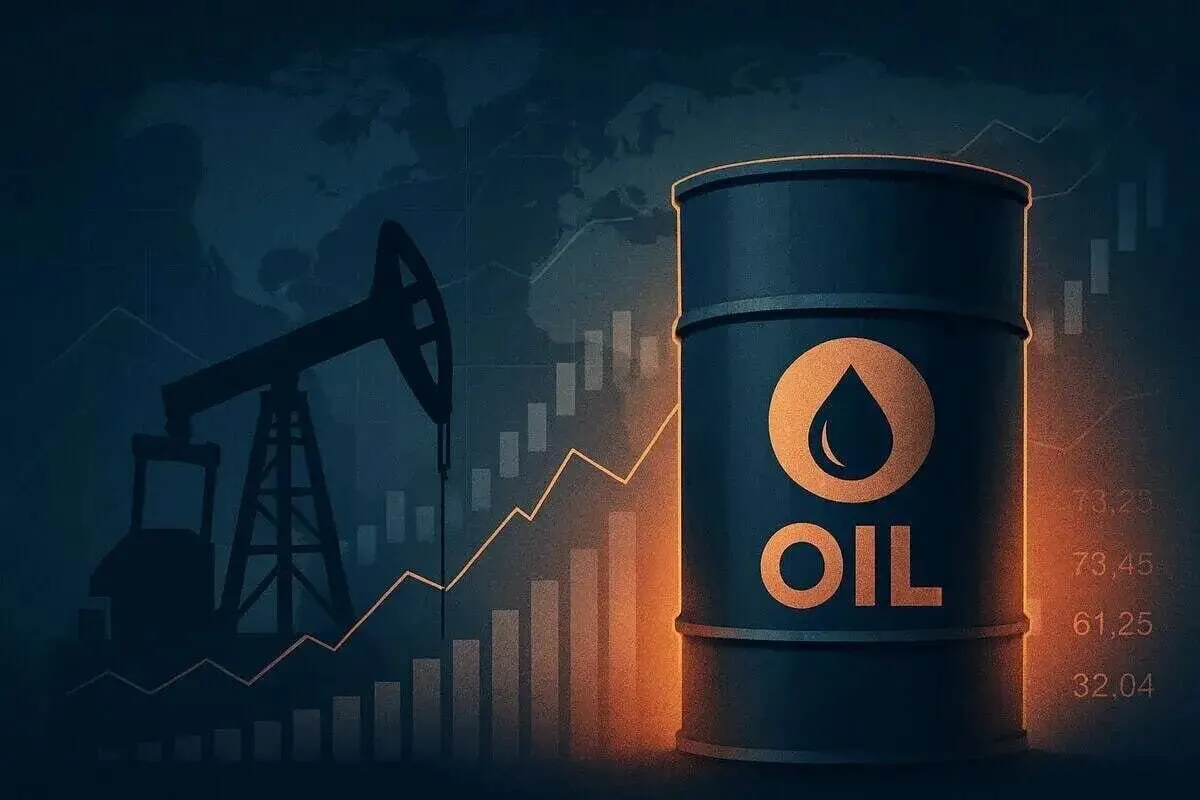
The European Commission has issued a stark warning that the effective closure of the Strait of Hormuz – triggered by the ongoing war in West Asia – will drive Brent crude prices to an average of $91.2 per barrel in 2026, a staggering 46% jump from previous estimates. The revised forecast, published Thursday in the EU’s Spring 2026 Economic Outlook, signals what officials call the most severe energy shock to hit Europe since the Russia-Ukraine conflict.
econews. Just months ago, before the outbreak of hostilities involving Iran, the Commission had predicted a modest $62.4 per barrel for 2026 and $63 for 2027. Those figures have now been torn up. “The energy shock resulting from the war in the West Asia and the de facto closure of the Strait of Hormuz is the single most important driver of this upward revision,” the report states explicitly.
According to the Commission’s analysis, following U.S. and Israeli strikes on Iran on February 28, 2026, crude prices surged roughly 65% by April 29. The virtual shutdown of the Strait – a chokepoint through which about one-fifth of global oil passes – has already slashed maritime oil flows by 15% and liquefied natural gas (LNG) shipments by 20%. Brussels now warns that oil and gas prices could remain 20% above pre-war levels for the foreseeable future.
In a particularly grim passage, the report cautions that if the Strait disruption and fighting persist, “the worst-case scenario has not yet materialized.” Energy prices may not peak until late 2026, and the European economy might fail to recover through 2027. The knock-on effects are already visible: eurozone growth for 2026 has been cut to 0.9% (down from 1.2%), while inflation in the eurozone has been revised up to 3.0% (from 1.9%) and to 3.1% across the entire EU.
Analysts note that the 46% forecast hike underscores how deeply the crisis is reshaping Western economic calculations. With Iran exercising effective control over the strategic waterway, global energy markets are bracing for prolonged turbulence. One Brussels-based energy economist, speaking on condition of anonymity, said: “We have not seen a supply-side shock of this magnitude since the 1970s oil embargo.”
The Commission’s spring report leaves little room for optimism, describing the Strait of Hormuz closure as the biggest energy shock to Europe since the invasion of Ukraine. For now, EU member states are scrambling to secure alternative supplies, but the report makes clear that no short-term fix can replace the lost throughput from the world’s most vital oil artery.
Loss of 1b barrels due to Iran war will slow oil market recovery, Aramco CEO warns  Japanese tanker transits Strait of Hormuz at Iran permission
  IMF sees risks to global growth forecast over sustained Iran war
 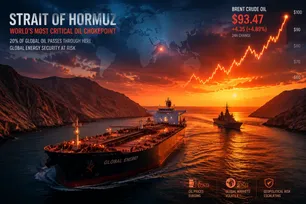 Oil up 3% after Iran attacked US warship
  Iran’s oil price per barrel tops $110 at global market
  Middle East hostilities rapidly burn out global oil reserves
 Comment