5 easy ways to cut your plastic use
econews. Plastic is a huge problem in today’s world. From visible waste that kills sea life and clogs up the world’s oceans, to micro and nanoplastics that are making their way into our bodies, it causes harm everywhere it ends up.
Even worse is that, unlike energy where green renewables are reducing the need for fossil fuels, the amount of plastic waste we generate every year is still growing. In fact, the United Nations projects that plastic waste will nearly triple by 2060 if the way we approach plastic doesn’t change.
This July, here are our top five tips to easily reduce plastic use without changing your life.
Shop plastic free
It can be challenging to take a trip to the supermarket without returning home with a mountain of single-use plastic packaging. Thankfully, there are lots of easy ways to cut down on your impact:
Buy loose fruit and vegetables instead of packaged ones. They’re usually cheaper and you can make it painless by investing in some washable mesh bags to hold them.
Use shopping bags made from natural materials. If you already have plastic Bags for Life, use them until they break and then recycle.
Instead of buying milk in plastic cartons, investigate your local doorstep delivery options. Traditional glass bottles are used, washed and used again by the suppliers.
Be bold in the bathroom
The average bathroom is filled with single-use plastic bottles for shower gel, shampoo, conditioner and more.
An easy switch is to move over to solid bars. Today’s solid shampoo and soap bars are a world away from the sudsless bars of the past – they work brilliantly and last much longer than liquid versions. Plus, they often come packaged in recyclable cardboard rather than plastic.
Clothes maketh the planet
Around 35% of microplastics entering the oceans come from synthetic clothing, so the more natural fabric you wear, the better it is for you and the planet. Choose the likes of wool and cotton over synthetics where possible.
The microplastics mainly shed from clothing through washing. To limit shedding, wash less often and use low temperatures and spin speeds. You can also buy special bags to hold your washing which protect your clothes and trap the microfibres before they’re flushed down the drain.
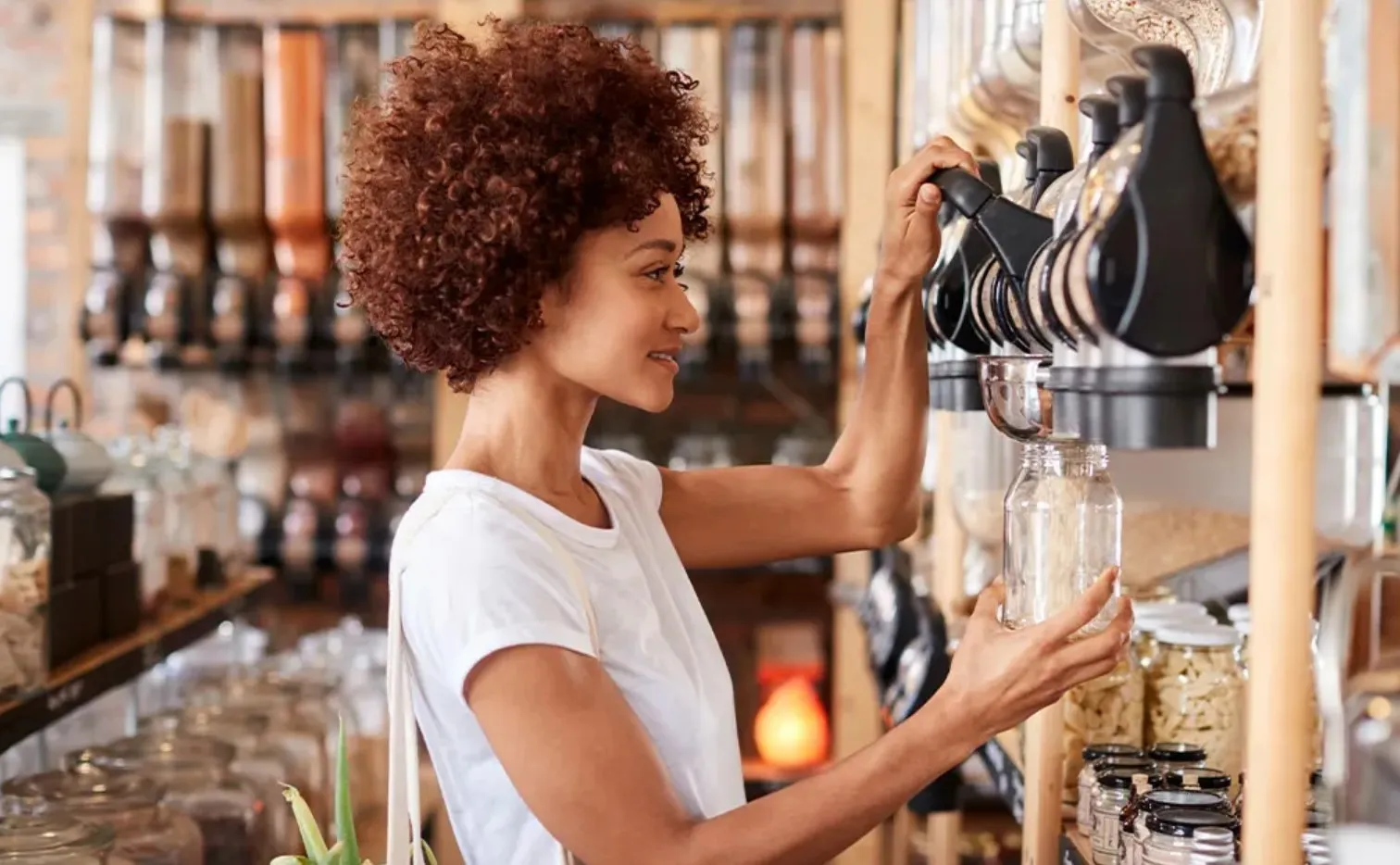
Most liquid laundry detergent comes in plastic bottles. To eliminate these, look into refillable options where you can top up your existing bottles at a local zero-waste shop.
Buy second hand and recycle
An increasing number of us are buying second hand items. Choosing second hand where possible is a great move that saves you money and reduces plastic use.
Continuing to use perfectly good clothes, toys, furniture or electronics also helps the environment in other ways. It lowers the demand for precious resources such as clean water and rare-earth minerals, reduces your carbon impact and puts less waste into landfills.
Create your own plastic-busting kit
Single-use convenience is big contributor to plastic pollution. When we’re out and about, sometimes it feels like the only option is that plastic bottle of water or plastic-coated coffee cup or even a plastic fork to eat a takeaway snack.
The solution? Pack a small, lightweight kit into your daily bag with the data-x-items you most often need – for example, a reusable water bottle, a coffee cup, a set of lightweight utensils and a packable carrier bag.
The trick is to always have it to hand, so you never need to think about it. Some super-organised people suggest buying two of each item, so you can put your dirty coffee cup in the sink when you get home and replace it instantly with a clean one in your bag.
Small changes, big impact
Over the past seven years, 174 million people have taken the Plastic Free July Challenge and avoided over 15 million tonnes of waste, including 1.7 million tonnes of plastic.
It proves that doing your bit towards reducing plastic use isn’t about making drastic changes to every aspect of your life. Instead, a few small changes made by a huge number of people can have a dramatic effect and improve the world for everyone.