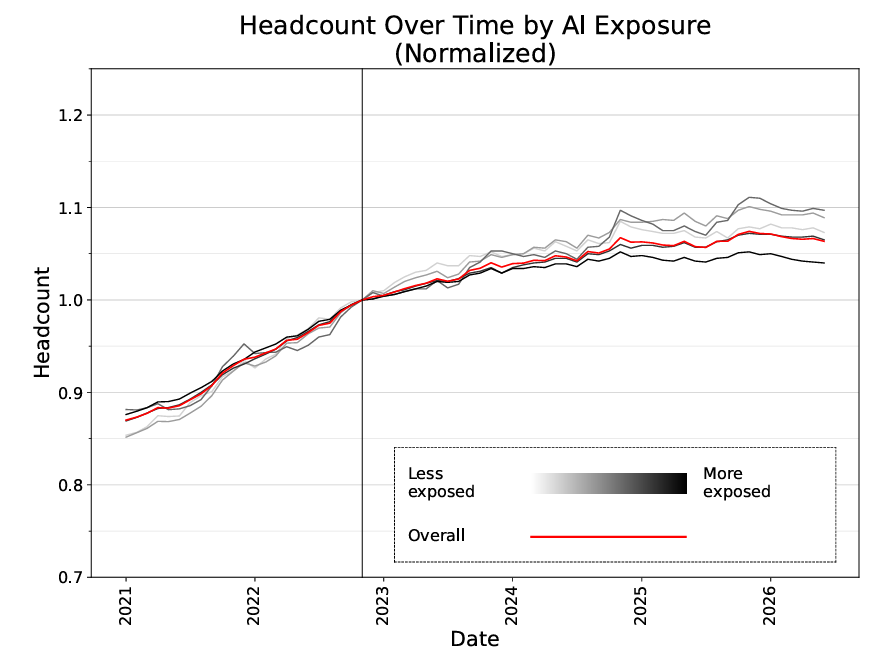
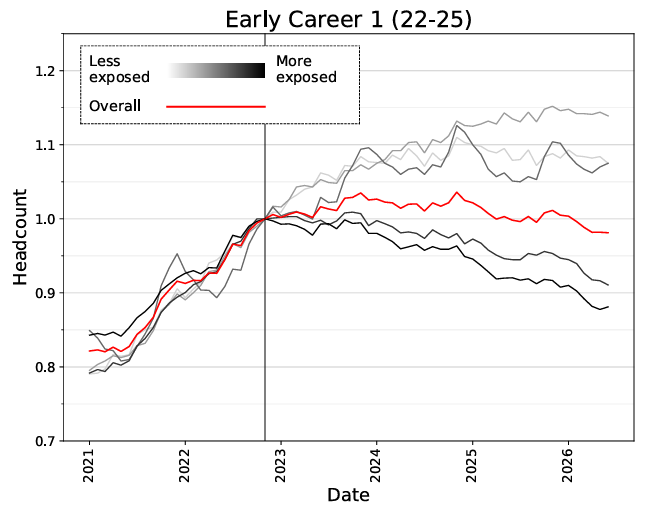
Digging deeper into the data, the researchers found that this phenomenon is mainly manifesting itself through lower hiring rates for entry-level workers in AI-impacted fields, rather than increased firings or employees quitting. They also found that the labor market effects among this age group were mostly seen in lower overall employment, rather than reduced pay rates.
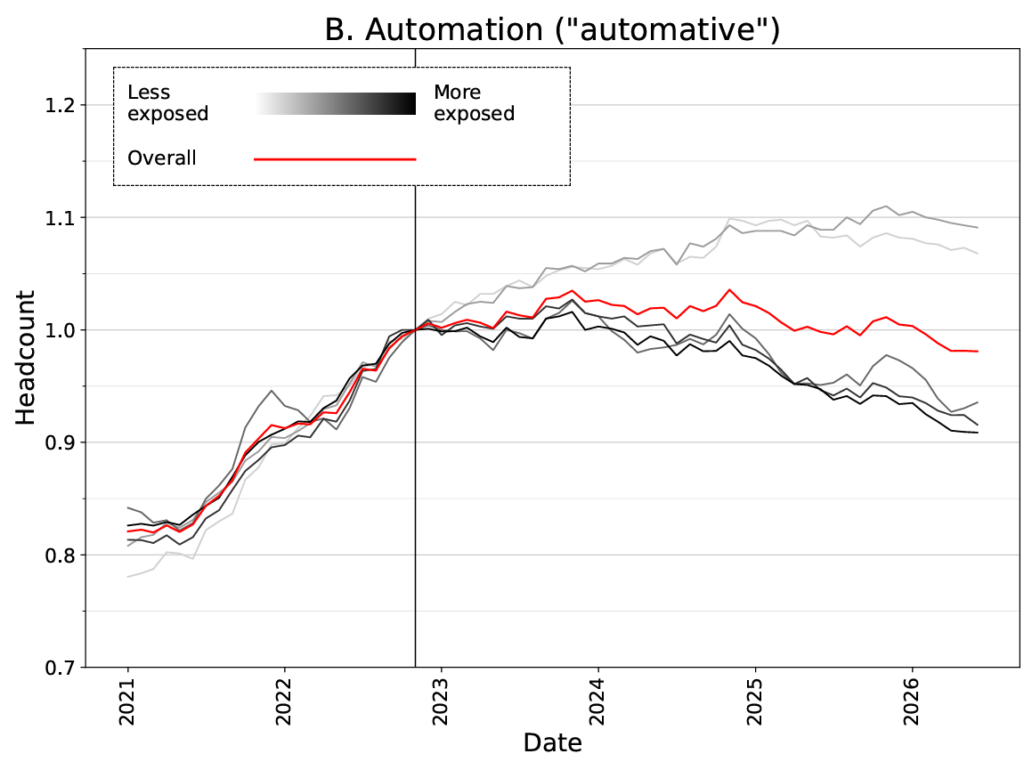
But not all jobs that show potential for AI “disruption” are created equal, the researchers found. In its Economic Index, Anthropic differentiates between queries related to tasks that are “automative” (i.e., fully replacing work previously done by a human) or “augmentative” (i.e., helping human workers be more effective at tasks they are still needed for). By this measure, jobs like “accountants and auditors” and “receptionists and information clerks” were among those judged most susceptible to AI automation, while jobs like “chief executive” and “registered nurse” were among those using AI augmentation most often.
Unsurprisingly, jobs where AI automation is prevalent are the ones showing the worst relative employment levels for entry-level workers these days. “The findings are consistent with automation-oriented uses of AI substituting for labor while complementary uses are associated with flat or rising employment,” the researchers write.