EU states to raise game as Arctic becomes strategic geopolitical frontier
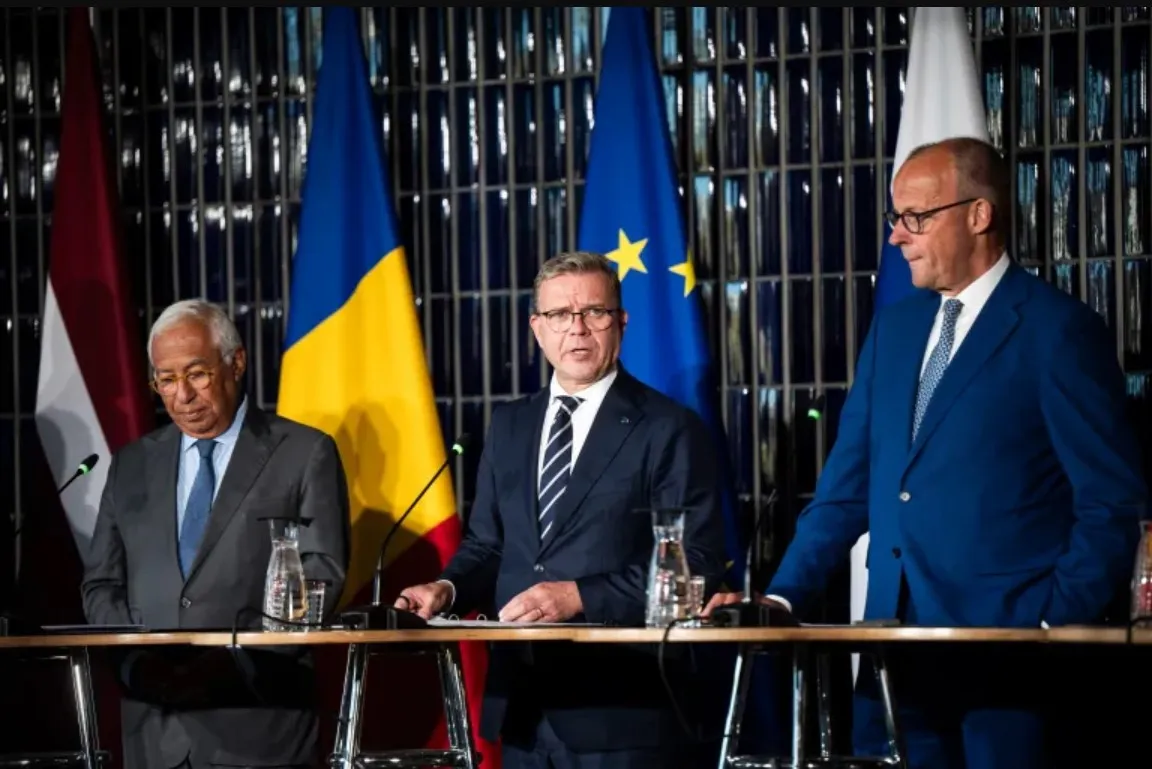
econews. European Union member states have agreed to increase investment in the Arctic amid a growing scramble for security advantages and vast natural resources.
Labelling the Arctic a “geopolitical hotspot”, a Monday meeting involving 12 countries called for the EU to “take on a more strategic and proactive role in the European Arctic”, meeting participants said in a joint statement.
The meeting, which featured the leaders of Finland, Denmark, Estonia, France, Greece, Germany, Latvia, Lithuania, the Netherlands, Poland, Romania and Sweden, focused on the race for influence over the Arctic as receding ice opens opportunities in the northern region. The discussion identified Russia as the largest threat to the European Arctic, but also noted the ambitions of China and the United States.
“This region has become a geopolitical hotspot,” German Chancellor Friedrich Merz told a news conference.
Despite Germany not being an Arctic country, Merz said his presence at the summit testified to the importance of the region to overall European security and suggested years of relative neglect should end.
“Let me put it this way: High north – and low attention – is over,” he said.
Russia, Canada, Iceland, Norway and the United States are considered Arctic countries, in addition to EU members Finland, Sweden and Denmark.
All have become involved in increasing geopolitical competition over the region as the retreat of ice sheets – spurred by climate change – has exposed its security and economic opportunities.
Russia has beefed up its military presence in recent years, reopening and modernising bases abandoned since the Soviet Union collapsed.
“Russia poses the most significant and long-term threat to Arctic security and stability. In order to respond to the threat posed by Russia, the EU must treat the Arctic as a strategic frontier,” said Finnish Prime Minister Petteri Orpo after the meeting.
The warming climate is opening up the Arctic for shipping, fishing, drilling and mining. China has made no secret of its interest in the territory, which is rich in natural resources.
The race has also stirred tension among NATO allies. Greenland, which is not part of the EU but overseen by Denmark, has become a bone of contention between the EU and the United States, with US President Trump claiming that Denmark cannot protect the Arctic island from Russia and China.
“I think everybody recognised that Greenland has been under a big pressure,” said Danish Prime Minister Mette Frederiksen.
Last week, the European Union signed a declaration with Greenland, promising a stronger partnership and announcing a 200-million-euro ($232m) investment package to soothe anxiety caused by repeated threats from Trump to annex the self-governing territory.
By Al Jazeera Staff, AP and EPA


- 1 The World’s Energy Jugular: Why the Strait of Hormuz Remains the Most Strategic Waterway on Earth
- 2 XRP, Bitcoin, Ethereum and Solana Are All Up More Than 20% in a Month
- 3 Did Iran capture a US submarine? What we know about the underwater drone
- 4 Rising tensions reshape the Middle East across the region
- 5 Results of US envoys’ visits and EU speculations: Putin-Trump phone call