France's third weekend of social protests sees lower turnout and early clashes in major cities
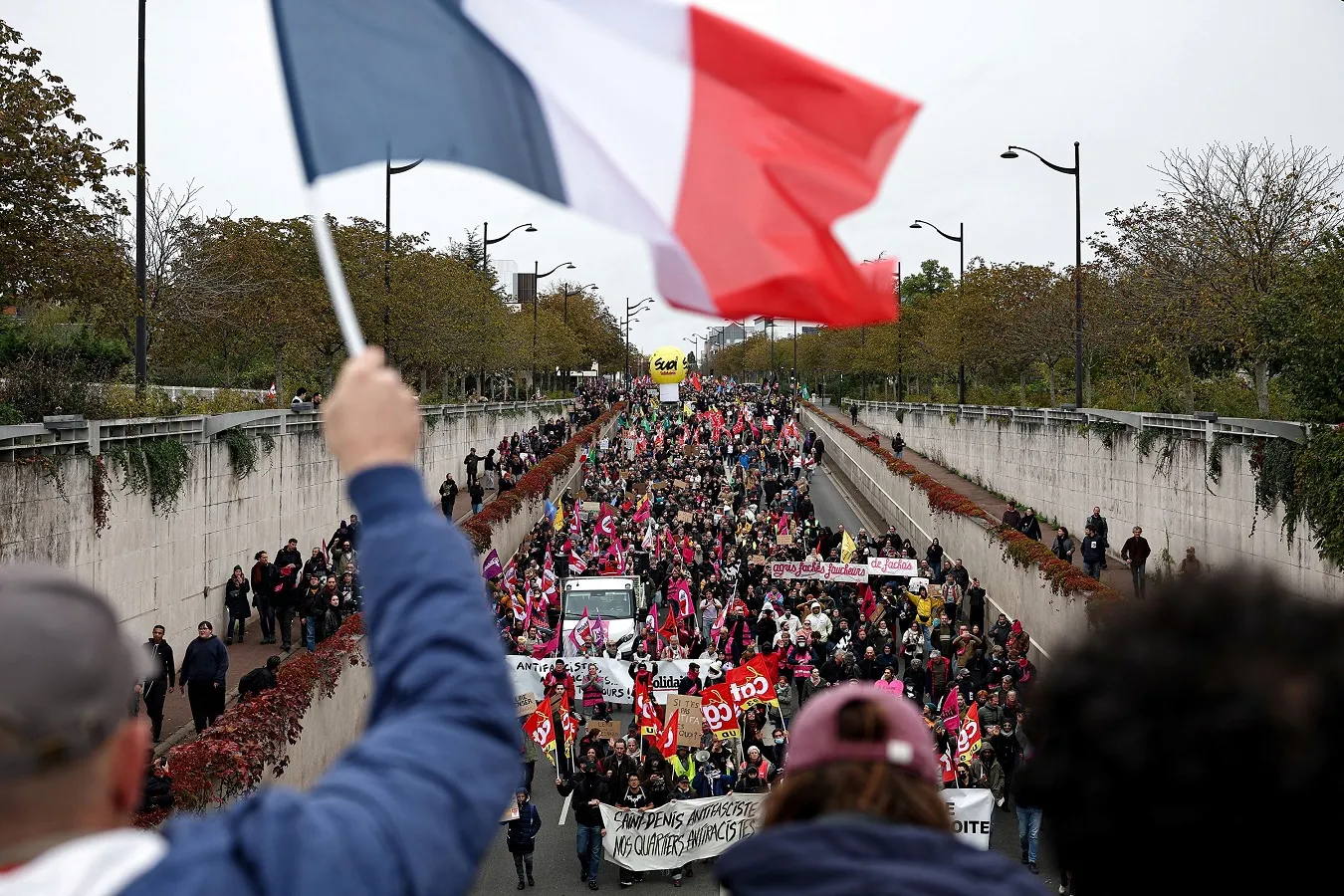
econews. The third consecutive weekend of the social mobilisation and demonstrations in France brought together some 320,000 participants, including 70,000 in Paris, according to the Interior Ministry.
This is a lower figure than on previous days of mobilisation: the government counted 410,000 participants on Saturday 24 October, compared with 550,000 on 17 October. The organisers, for their part, said they had counted 800,000 demonstrators on each of those two days.
The lower participation could in particular be explained by disruption to public transport. In Lyon, our reporter Jean-Philippe Liabot noted that "the trams and metro trains are only running at half". In Paris, more than 40 metro stations are closed, and tram traffic is also affected.
Earlier in the day, the Interior Ministry reported a situation that was "generally calm", "without any notable incident". By 2 p.m., 27 arrests had been recorded, compared with 217 at the same time during the 24 October mobilisation.
Authorities put in place measures to limit disorder
But the authorities fear that Halloween evening could be used as a "pretext" for clashes in the streets, as marches start to disperse in some major cities.
In Lyon, our reporter observed the use of tear gas as the demonstration arrived at Place Jean-Macé, in the 7th district.
"The security forces will show the greatest firmness towards those responsible for violence and damage," the Interior Ministry warned.
The rallies began last month as a high school student movement protesting neglected buildings, teacher shortages and a university admissions system seen as unfair to disadvantaged students. Labour unions and others angry at President Emmanuel Macron have since joined with varied demands.
Most protesters have been peaceful, but troublemakers routinely target police with fireworks and projectiles. Some protests have turned into rioting and looting, including the 17 October unrest that appeared to take the government by surprise.
Police have responded with tear gas, dispersion grenades, water cannons and other tactics that have caused severe injuries.
Macron said Saturday’s marches would stay out of city centres to protect shops. Police barred entry to Place de la République and Les Halles from 11 p.m. to 6 a.m.
This Saturday and Sunday, unaccompanied minors face a 9 p.m. curfew around the Champs-Élysées, although a Paris court on Wednesday suspended an earlier curfew on minors as a serious and illegal infringement of freedom of movement.
By Alexander Kazakevich & Jerry Fisayo-Bambi & Estelle Nilsson-Julien



- 1 ‘Arab voice doesn’t count’: Jewish Israeli blocs reject Palestinian support
- 2 DC and Virginia sue to block Trump arch construction
- 3 Multiple tankers and drone reported struck around Hormuz
- 4 Patrick Stewart, ‘Star Trek’ Captain Picard and ‘X-Men’ actor, dies at 86
- 5 The US-China trade war seems to have subsided – but the sense of calm is misleading