 Zelensky suggests new round of peace talks could happen during G-20 summit
Germany’s Daisytuner raises €6 million to make AI models run faster across NVIDIA, AMD and emerging chips
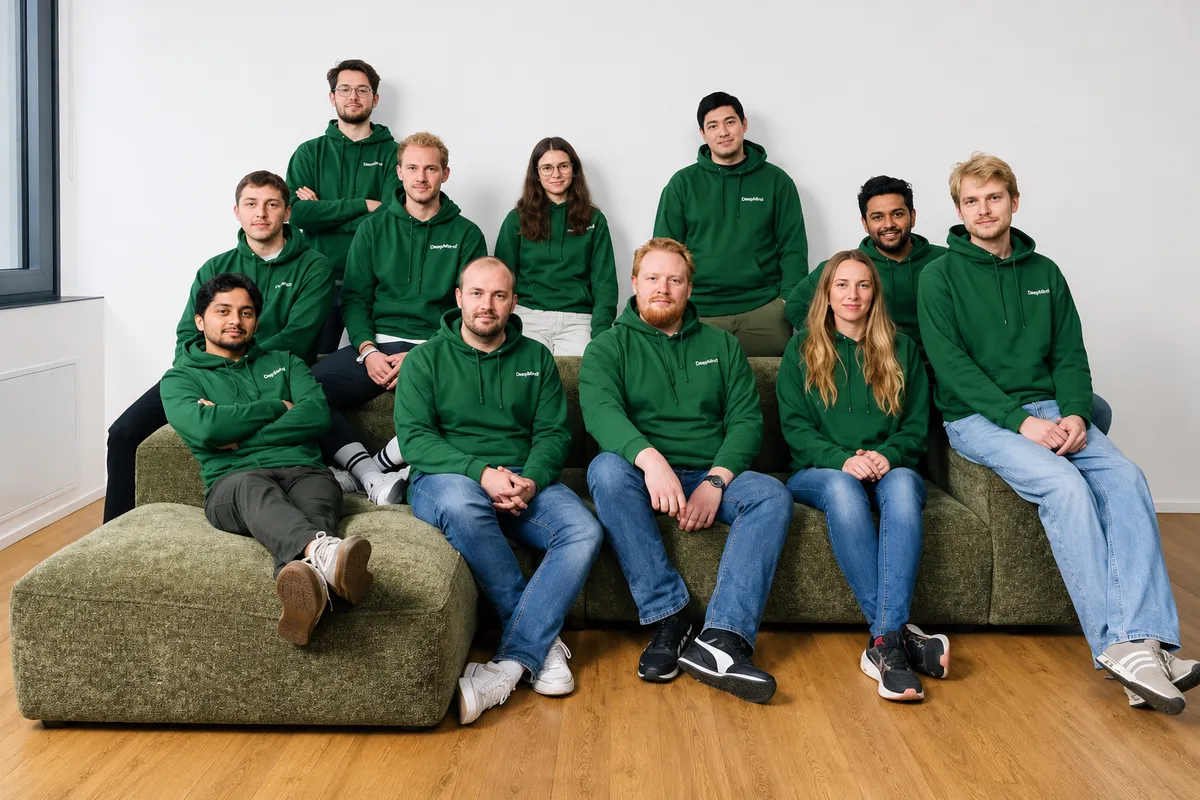
econews . Daisytuner, a Darmstadt-based DeepTech startup working on automating AI model performance engineering across any chip, has raised €6 million in Seed funding.
econews. The round was co-led by European venture capital firms Elaia and LEA Ventures, with participation from Amadeus APEX Technology Fund and Seedcamp. Alongside the fundraise, the company also launched Daisyflow, its high-performance inference engine designed to run AI models efficiently on any hardware, addressing a critical bottleneck for the AI industry.
“Compute is the scarcest resource in AI, and most of it currently sits behind a single vendor’s software stack. Daisytuner lets the same code run at full performance on the silicon you choose, without a rewrite. Removing this bottleneck is what the whole industry needs. Lukas and Adrian have built world-class compiler technology from cutting-edge research and we’re proud to back them,” said Sébastien Lefebvre, Partner at Elaia.
Founded in 2024 by Lukas Trümper and Adrian Schmitz, Daisytuner is built on a team with over a decade of research experience from leading labs such as ETH Zurich, TU Munich, RWTH Aachen, TU Darmstadt, and Lawrence Livermore National Laboratory. It automates performance engineering of AI models by pairing a self-learning compiler with a patented optimisation platform.
The company’s open-source compiler, DOCC, translates code from popular frameworks such as PyTorch into native code for each target chip, whether it is GPUs from NVIDIA and AMD or newer architectures. Around the clock, AI agents test optimisations on real hardware and every verified result is stored in a performance database and reused on similar code. In other words, the verified compiler results are used to improve each new workload.
Daisytuner’s Seed funding comes at a time when AI companies and hyperscalers worldwide are shifting from adding more capacity to optimising existing AI infrastructure. Optimising AI performance at the chip level has proven to remove a major bottleneck: how efficiently AI models run on the hardware that powers them.
This optimisation work, known as performance engineering, has historically been manual and slow work done by a handful of frontier labs. With hardware becoming diverse, each new chip or GPU generation or model risks breaking earlier optimisations, leaving most hardware to work below its potential. Daisytuner is fixing this by replacing manual performance optimisation with an automated self-learning process.
“Demand for AI compute is growing faster than any one chip generation can serve. The hardware to meet it is already out there, from established GPUs to a wave of new accelerators, but software keeps much of it on the sidelines. We’re working with chip vendors, European hyperscalers and enterprises to change that, so every chip runs at full speed and new ones go into production the moment they arrive,” said Trümper, co-founder and CEO of Daisytuner.
Alongside the funding announcement, Daisytuner has launched Daisyflow, its production-ready AI inference engine. Built on open frameworks, Daisyflow serves language, vision, speech and recommendation models using APIs that engineering teams already use. It can be deployed inside a customer’s own infrastructure, giving companies full control over their data and costs without the need to build large in-house engineering teams from day one.
In a statement, Daisytuner says the platform showed Qwen 2.5 running up to 18% faster than the industry-standard vLLM on AMD Instinct GPUs. The platform is now available via the company’s Cloud Console, bringing together the DOCC compiler, continuous benchmarking on real hardware, a web IDE for designing custom optimisations, and a live performance database queried automatically during compilation.
The startup plans to use the fresh capital to scale Daisyflow’s reach across enterprises, growing its engineering team and broadening its compiler’s support for emerging chip architectures. With OpenAI and Anthropic working on their in-house custom silicon, Daisytuner aims to become the software layer used to unlock performance across every chip on the market.
Zelensky suggests new round of peace talks could happen during G-20 summit  Car use in London forecast to rise by 10% in next decade
 Far from Trump-Putin meeting, Europe to count cost of Ukraine’s defence
Comment




Most Read
- 1 Kazakhstan's Tokayev demands anti-corruption proposals within days after detentions of wealth fund rail chiefs
- 2 Nvidia Fallout Looms Over Trump-Xi Meeting
- 3 Elon Musk joins 165,000 others calling for Nvidia to bring back Jensen Huang in open letter
- 4 Germany’s Daisytuner raises €6 million to make AI models run faster across NVIDIA, AMD and emerging chips
- 5 EU readies fresh sanctions on Russia amid 'absurd' demands and winter strikes