 G7 Ministers Back Maritime Security and Global Stability at Paris Meeting
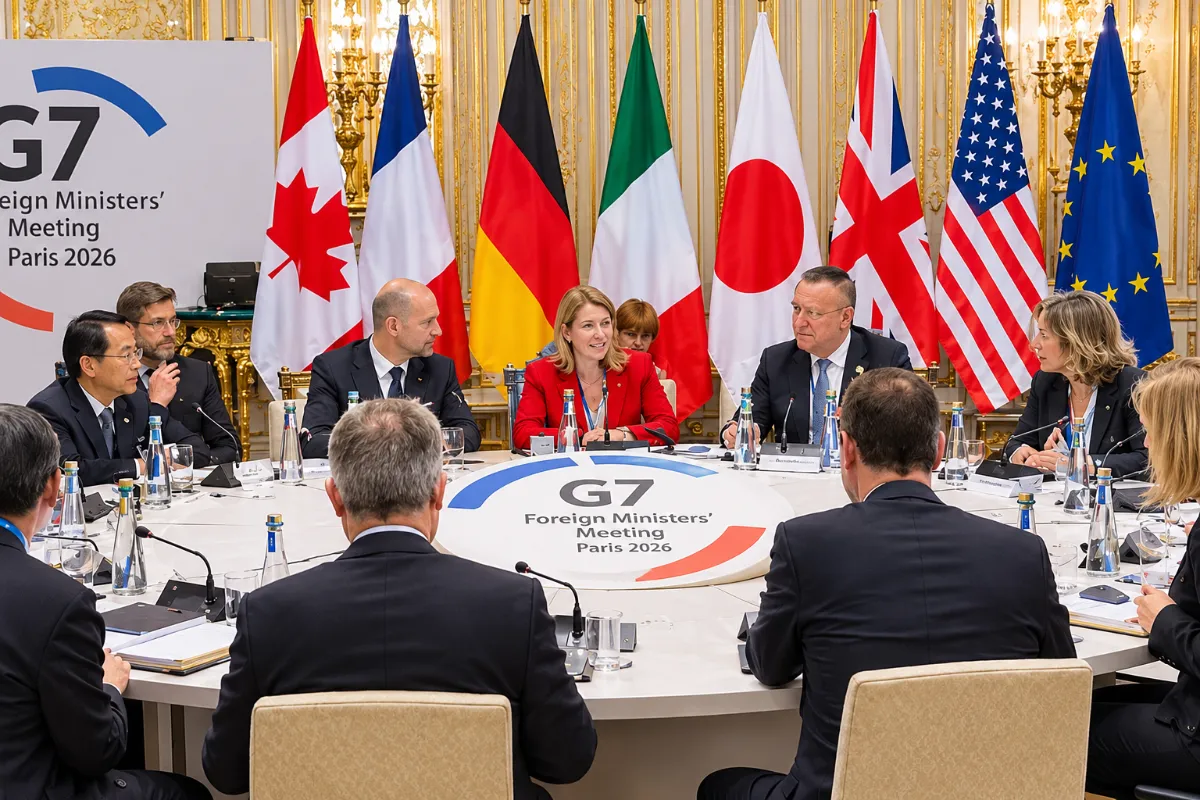
econews . G7 Ministers Back Maritime Security and Global Stability at Paris Meeting, highlighting the importance of protecting international transport corridors, strengthening maritime security and reducing geopolitical risks affecting global connectivity.
econews. Foreign ministers from Canada, France, Germany, Italy, Japan, the United Kingdom and the United States met in Paris on 9–10 November under France’s G7 presidency, alongside the European Union’s High Representative.
Their joint statement, published on 11 November, addressed conflicts, international shipping, critical infrastructure and economic resilience. Although the discussions did not introduce specific tourism or aviation policies, their outcomes carry implications for airlines, cruise operators, shipping companies and destinations dependent on reliable international access.
The ministers emphasised freedom of navigation, protection of civilian vessels and stronger international cooperation. For the travel industry, these priorities underline the connection between geopolitical stability, operational confidence and the long-term sustainability of cross-border transport networks.
Maritime security emerges as a central priority
Maritime safety featured prominently in the discussions, particularly concerning the Strait of Hormuz, the Red Sea and the Bab al-Mandab Strait.
The G7 condemned attacks against civilian vessels and reaffirmed support for safe passage through strategically important waterways.
Ministers also recognised defensive maritime initiatives involving France, the United Kingdom and other international partners.
For cruise operators, maritime security remains an important consideration when evaluating itineraries, insurance arrangements and operational contingency plans.
Although the statement did not announce new cruise restrictions, continued regional tensions reinforce the importance of monitoring official maritime guidance.
Middle East tensions raise wider transport concerns
The ministers expressed concern about instability involving Iran, Yemen, Lebanon, Gaza and Syria.
They highlighted the disruption of international trade and energy security caused by restrictions affecting the Strait of Hormuz.
Such developments can influence aviation indirectly through fuel markets, operating expenditure and wider regional uncertainty.
Airlines must also consider applicable airspace restrictions, security assessments and government advisories when planning services.
The G7 supported diplomatic efforts intended to reduce tensions and strengthen regional stability, although no immediate changes to commercial flight operations were announced.
Ukraine conflict remains a concern for connectivity
The G7 reaffirmed support for Ukraine and condemned attacks affecting civilian infrastructure and shipping in the Black Sea.
Ministers called for a comprehensive ceasefire and measures protecting energy infrastructure and maritime trade.
The conflict continues to present challenges for regional connectivity, including route planning, infrastructure resilience and international transport confidence.
The statement also emphasised coordinated sanctions against Russia and efforts to disrupt vessels associated with sanctions circumvention.
These commitments demonstrate the continuing importance of regulatory compliance and geopolitical risk assessment across international transport operations.
Critical infrastructure and global connectivity
Beyond regional conflicts, the ministers addressed vulnerabilities affecting submarine telecommunications cables, satellite systems and maritime infrastructure.
They encouraged stronger international cooperation, information-sharing and contingency arrangements to improve resilience.
Reliable communications infrastructure supports airline operations, navigation, booking platforms and other services essential to international tourism.
Disruptions affecting these networks could create operational difficulties extending beyond the locations directly involved.
The G7 also announced a ports cooperation network targeting drug trafficking, reflecting wider efforts to improve maritime security.
What the decisions mean for tourism businesses
For tourism organisations, the Paris discussions reinforce the importance of preparedness rather than signalling immediate regulatory changes.
Travel businesses may need to maintain flexible itineraries, monitor official security assessments and communicate clearly with customers.
Airlines, cruise companies and tour operators also benefit from coordinating contingency planning with relevant authorities and industry partners.
The meeting illustrates how international security policy can influence commercial travel conditions even when tourism is not directly addressed.
Conclusion
The G7 Foreign Ministers’ Meeting in Paris highlighted the relationship between international security, transport infrastructure and global economic stability. By prioritising maritime safety, diplomatic engagement and infrastructure resilience, participating governments reaffirmed commitments that could support more predictable operating conditions for international travel.
However, the joint statement did not establish new tourism regulations, aviation agreements or passenger travel requirements. Its significance for the industry lies primarily in the broader security environment.
For airlines, cruise operators, destinations and travel businesses, continued monitoring of geopolitical developments, official advisories and infrastructure risks will remain essential to maintaining safe, reliable international connectivity.
G7 Ministers Back Maritime Security and Global Stability at Paris Meeting  German Economic Council significantly revised up growth forecast, says chair
 Qatar PM describes fallout of US-Israel war on Iran as ‘earthquake’
Comment



Most Read
- 1 Kazakhstan's Tokayev demands anti-corruption proposals within days after detentions of wealth fund rail chiefs
- 2 Nvidia Fallout Looms Over Trump-Xi Meeting
- 3 Elon Musk joins 165,000 others calling for Nvidia to bring back Jensen Huang in open letter
- 4 Germany’s Daisytuner raises €6 million to make AI models run faster across NVIDIA, AMD and emerging chips
- 5 EU readies fresh sanctions on Russia amid 'absurd' demands and winter strikes