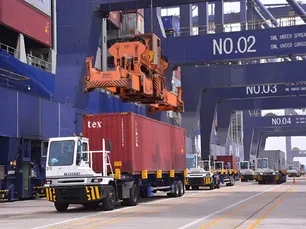
 Afghan-Pakistan conflict hindering Central-South Asian trade
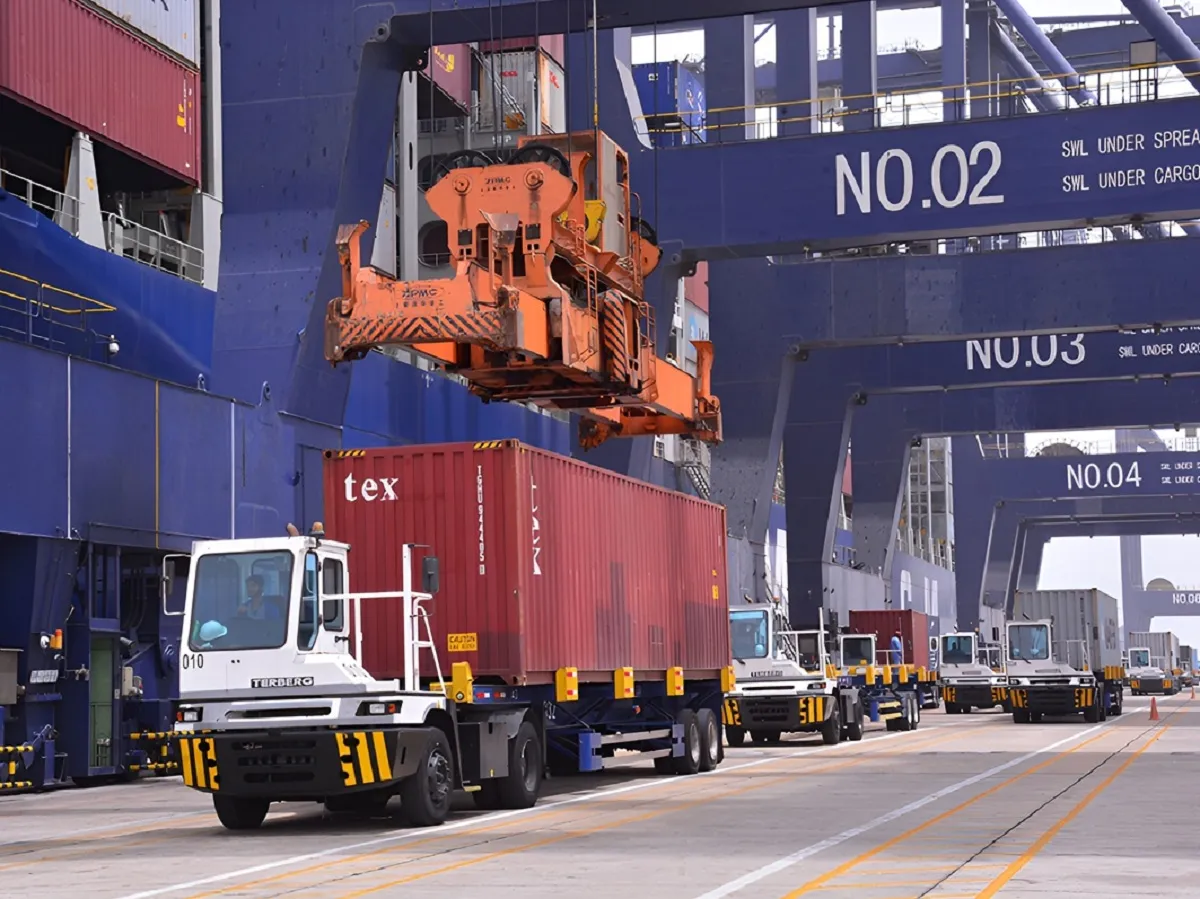
econews . Central Asian trade with Pakistan is struggling to gain traction, underscored by Kazakhstan’s downward revision of its annual bilateral trade turnover target with Islamabad.
econews. The ongoing conflict between Afghanistan and Pakistan is the main factor hindering inter-regional commerce between Central and South Asia.
Earlier in 2026, Kazakh and Pakistani officials seemed optimistic that annual trade volume could top $1 billion soon. But on November 1, during talks in Astana between Kazakh Deputy Prime Minister Serik Zhumangarin and Pakistan’s minister for investments, Qaiser Ahmed Sheikh, the two sides “estimated the potential for increasing bilateral trade at approximately $645 million,” according to a Kazakh government statement.
Like Kazakhstan, Uzbekistan is quietly acknowledging it will be difficult to meet ambitious trade targets. In September, Uzbekistan and Pakistan announced they would aim to increase annual trade volume to $2 billion over the next five years.
Official data from the previous two years suggest reaching that $2 billion goal will be a challenge. In 2024, for example, Pakistani exports to Uzbekistan, comprising mainly medical supplies, citrus and rice, totaled $129 million, while Uzbek exports to Pakistan reached $257 million, consisting mostly of agricultural products and cotton yarn. Trade data for 2025 indicate that bilateral volume was flat.
Recent diplomatic discussions have focused on accelerating the trade pace. “Reaffirmed our commitment to further developing bilateral relations on the basis of strong political dialogue and mutual support,” Uzbek Foreign Minister Bakhtiyor Saidov posted on social media following a November 1 telephone discussion with his Pakistani counterpart, Mohammad Ishaq Dar
The Uzbek senate’s Committee for Defense and Security held a closed-door session in late October that focused on developing “measures to address challenges hindering the timely execution” of bilateral agreements and memos of understanding with Islamabad.
Though not specifically mentioned in official readouts and media reports of trade talks, the disruption caused by Pakistan’s low-intensity war with the Taliban government in Afghanistan is widely viewed as a major obstacle for inter-regional connectivity. The conflict shows no signs of ending soon and now threatens to catalyze the spread of instability across Afghanistan. The New York Times reported in late October that Pakistani security officials had contacted the leaders of anti-Taliban militant groups in Afghanistan, raising the possibility that Islamabad could foment internal armed resistance to the Taliban.
The gap between Pakistan’s leadership and the Taliban was on full display at an early October meeting in Moscow to discuss Afghan stabilization measures. The discussions involved diplomats from all Central Asian states except Turkmenistan, along with those from Afghanistan, China, India, Iran, Pakistan and Russia. The meeting, held under what is known as the Moscow Format, failed to issue a joint statement due to a dispute between the Afghan and Pakistani representatives over terminology concerning terrorism.
While in Astana, Sheikh, Pakistan’s investments minister, gave a speech at an investment forum that glossed over the Afghan-Pakistani conflict. Instead, Sheikh touted Pakistani ports as “strategic gateways that could facilitate regional trade, strengthen transportation links and provide alternative routes for the movement of goods” for Central Asian states.
Afghan-Pakistan conflict hindering Central-South Asian trade  Russian Railway Official to Visit Afghanistan for Railway Development Talks
 Afghanistan, UAE Emphasize Expansion of Bilateral Relations
Comment



Most Read
- 1 ‘Arab voice doesn’t count’: Jewish Israeli blocs reject Palestinian support
- 2 DC and Virginia sue to block Trump arch construction
- 3 Multiple tankers and drone reported struck around Hormuz
- 4 France's third weekend of social protests sees lower turnout and early clashes in major cities
- 5 Patrick Stewart, ‘Star Trek’ Captain Picard and ‘X-Men’ actor, dies at 86