 Climate finance takes center stage at COP31: Why the Antalya talks matter for Tajikistan
Kazakhstan Offers Tajikistan Cooperation, Not a Substitute for Russia
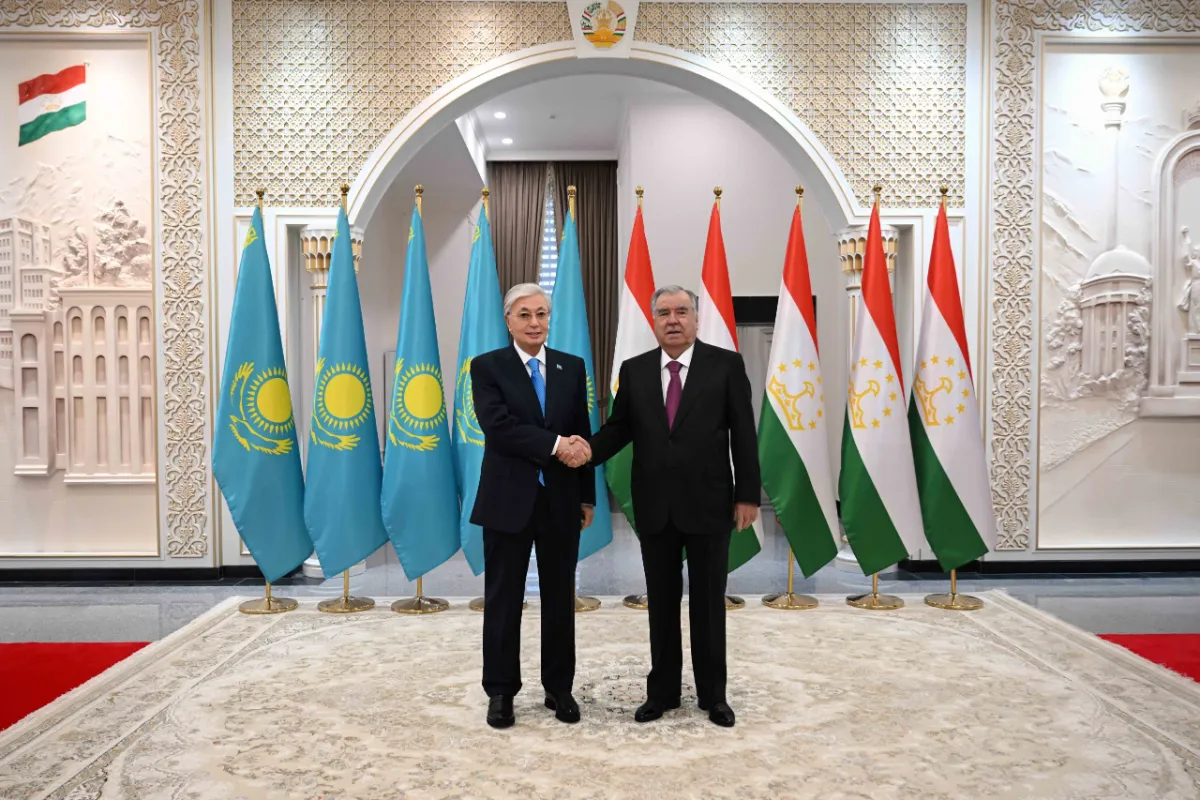
econews . Rahmon’s visit to Astana produced 14 agreements, including a fuel supply framework, but Kazakhstan’s deliveries this year show the limits of what it can provide.
econews. Tajik President Emomali Rahmon left Astana on November 7 with a framework agreement on petroleum product supplies and a roadmap to expand bilateral trade through 2030. Kazakhstan’s fuel deliveries to Tajikistan fell by two-thirds in the first nine months of the year, an indication of the gap between diplomatic commitments and the supplies available.
Rahmon’s three-day official visit produced a joint statement on cooperation priorities and 14 intergovernmental and interagency documents, including agreements on electricity, mining and metallurgy, health care, and pension data sharing, an agricultural roadmap for 2027-2028, and memorandums on artificial intelligence and e-commerce. Kazakhstan will also train personnel for the border troops of Tajikistan’s State Committee for National Security and will back Tajikistan’s first-ever bid for a non-permanent U.N. Security Council seat in 2028-2029, a race against India. The visit builds on the Treaty on Allied Relations signed in Dushanbe in August 2024, which Tokayev ratified in May 2026. A business forum held on the day of Rahmon’s arrival produced 11 announced commercial agreements worth $135.3 million.
Tokayev told reporters that bilateral trade is “confidently approaching” $2 billion. That ambition remains above the latest reported totals: $1.13 billion in January-September 2026, with Rahmon citing growth of almost 26 percent year-on-year. The trade between the two countries is hardly balanced, however. Tajikistan buys up to 1 million tons of Kazakh grain a year and also imports Kazakh flour, liquefied gas, and aluminum oxide, while more than 80 percent of Tajik fruit and vegetable exports went to Kazakhstan as of 2024. In January-May 2025, Tajik exports to Kazakhstan totaled just $31.3 million against $450.1 million in imports. In January-September 2026, Kazakhstan supplied 12.5 percent of Tajikistan’s imports, behind China and Russia.
The fuel framework targets Tajikistan’s most acute vulnerability. Ukrainian strikes on Russian refineries and Moscow’s fuel-export restrictions disrupted the regional supply system this year. Although deliveries under intergovernmental agreements were formally exempt from Russia’s export bans, Tajikistan still faced supply difficulties, and several Dushanbe filling stations ran out of diesel in July. Tajik customs data reported by Reuters show that Russian deliveries fell 10.8 percent in January-September, to 708,000 tons, cutting Russia’s share of Tajik petroleum-product imports from 88.4 percent to 77.2 percent. Turkmenistan, Uzbekistan, and Iran covered much of the shortfall, and total import volume still rose 2.2 percent. Kazakhstan restricted its own fuel exports to protect its domestic market and thus deliveries fell from 27,100 to 9,100 tons, or 1 percent of Tajikistan’s petroleum product imports by volume.
The electricity agreement points to Astana’s interests. Kazakhstan has sought since 2023 to buy power from Tajikistan’s Rogun hydropower plant to cover deficit hours in its grid, with deliveries routed through Uzbekistan. A draft approved by the Kazakh government in April 2025 envisaged a 20-year arrangement, with supply conditional on neighbors’ transit capacity; whether those terms are actually in the signed text has not been disclosed. Construction on Rogun began in 1976 and has been repeatedly interrupted; after 50 years, the hydropower project currently has two units operating at low capacity. Export contracts with Kazakhstan and Uzbekistan are central to financing the dam’s completion. Tajikistan’s recurring winter shortages complicate exports, but do not rule them out.
Rahmon’s Kazakhstan visit fits Dushanbe’s broader aims of diversification. China accounted for 28 percent of Tajikistan’s imports and 30.5 percent of its exports in January-September 2026, according to the Tajik Statistics Agency, and Rahmon signed a permanent friendship treaty in Beijing in May. Eurasianet reported that work-purpose entries by Central Asian citizens into Russia fell roughly 15 percent in the first half of 2026, and Kazakhstan is emerging as an alternative for Tajik migrants. Kazakhstan can help diversify Tajikistan’s economic relationships, but on fuel its immediate role is marginal next to Russia’s. It’s telling that the published summaries of the new fuel framework don’t specify volumes, products, or delivery dates.
Climate finance takes center stage at COP31: Why the Antalya talks matter for Tajikistan  Kazakhstan Offers Tajikistan Cooperation, Not a Substitute for Russia
 Korea National Railway Aids Tajikistan Transport Plan
Comment



Most Read
- 1 Kazakhstan's Tokayev demands anti-corruption proposals within days after detentions of wealth fund rail chiefs
- 2 Nvidia Fallout Looms Over Trump-Xi Meeting
- 3 Germany’s Daisytuner raises €6 million to make AI models run faster across NVIDIA, AMD and emerging chips
- 4 Elon Musk joins 165,000 others calling for Nvidia to bring back Jensen Huang in open letter
- 5 EU readies fresh sanctions on Russia amid 'absurd' demands and winter strikes