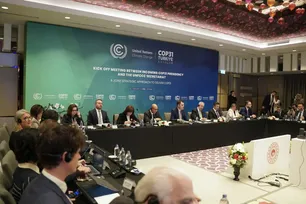
 Climate finance takes center stage at COP31: Why the Antalya talks matter for Tajikistan
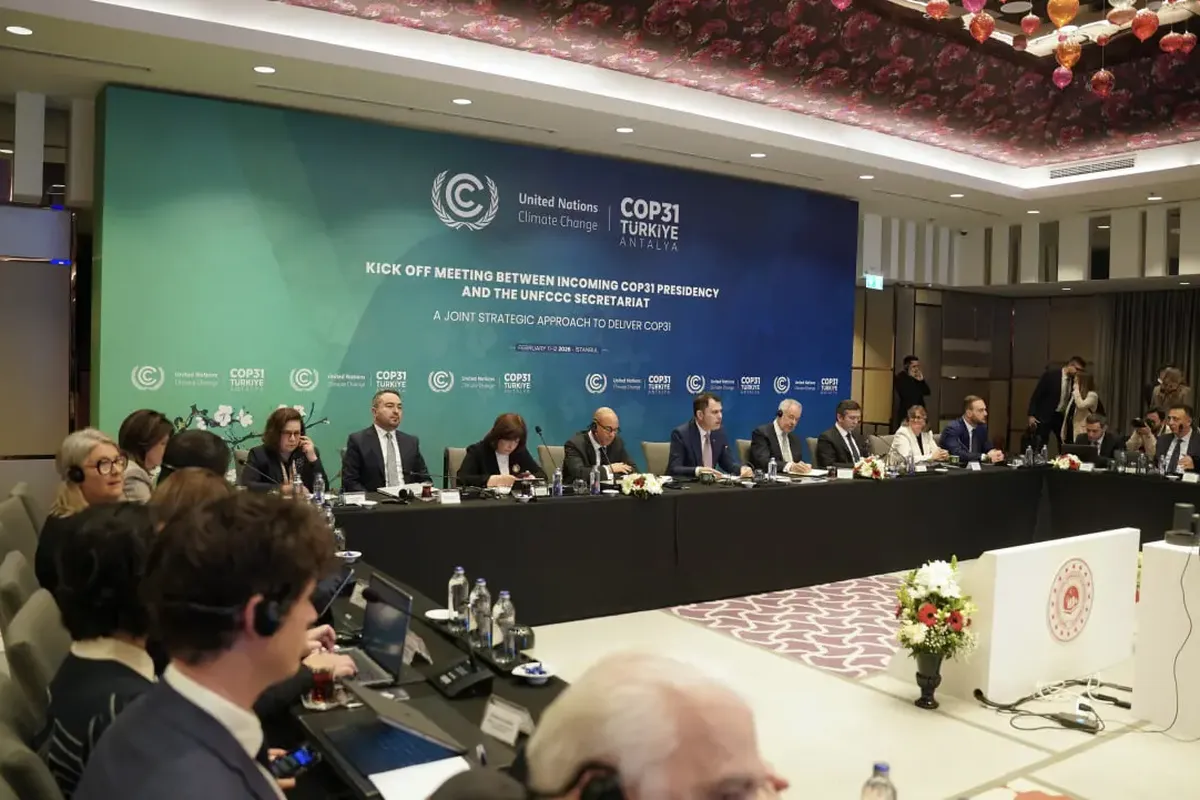
econews . Developed countries are increasingly offering loans instead of grants. For Tajikistan, this threatens to increase the debt burden and leave the country short of funds for disaster protection.
econews. Climate finance has emerged as one of the main points of contention at the UN climate summit COP31 in Antalya, Türkiye, with tensions mounting between developed and developing countries over funding commitments.
According to an analysis by Carbon Brief, the volume of new multi-year financial commitments from donor countries has declined by 71%. At the same time, greater emphasis is being placed on mobilizing private investment and providing loans rather than offering direct public financing.
For Tajikistan, which needs an estimated $20–22.5 billion to implement its national climate action plan through 2035, this shift poses additional challenges. The country faces mounting costs associated with protecting communities and infrastructure from mudflows, droughts, and other climate-related hazards. However, greater reliance on borrowed funds could further increase its debt burden.
Why are developed countries cutting climate finance?
Developed countries are increasingly redirecting public funds toward domestic priorities, including inflation control, social spending, and higher defense expenditures, while reducing international aid budgets. The United States, one of the world’s largest climate finance contributors, has not participated in the Antalya summit, according to the information cited in the analysis.
Rather than committing additional public funds, wealthy countries are placing greater emphasis on mobilizing private investment and attracting financing from commercial banks, according to the UN Economic Commission for Africa (UNECA).
Critics argue that this approach allows donor countries to report progress in mobilizing climate finance without providing equivalent amounts of direct public funding.
The consequences are particularly serious for developing countries, which have contributed relatively little to global greenhouse gas emissions but are among those most exposed to the effects of climate change.
In October 2026, Tajikistan’s government approved an updated Nationally Determined Contribution (NDC 3.0), outlining the country’s climate commitments and priorities for 2026–2035.
According to the Committee for Environmental Protection under the Government of Tajikistan, implementing the plan’s 166 measures will require between $20 billion and $22.5 billion.
The proposed investments cover a wide range of priorities, including modernizing hydropower facilities, developing solar energy, monitoring glaciers in the Pamir Mountains, reinforcing riverbanks, introducing drip irrigation systems, and protecting communities from mudflows and droughts.
Tajikistan accounts for less than 1% of global greenhouse gas emissions, while approximately 98% of its electricity is generated by hydropower plants. Despite its relatively small contribution to global emissions, the country is estimated to lose between 1.3% and 3% of its gross domestic product (GDP) annually as a result of climate change.
What climate funding is Tajikistan seeking?
On the sidelines of COP31, the Tajik delegation is holding talks aimed at expanding the country’s access to international climate finance.
Deputy Prime Minister Sulaymon Ziyozoda met with Ibrahim Cheikh Diong, Executive Director of the Fund for Responding to Loss and Damage (FRLD). Their discussions focused on support for mountainous countries, financing measures to address glacial lake outburst floods and mudflows, and preparing joint funding applications for early warning systems.
Meanwhile, Tajikistan, Uzbekistan, and Kyrgyzstan have submitted a joint application for $20 million to develop early warning systems for natural disasters. Under the proposal, 75% of the funding would be allocated to rural communities.
Another initiative discussed in the context of COP31 is the CLiCA program, implemented with the participation of the German development agency Deutsche Gesellschaft für Internationale Zusammenarbeit (GIZ) and the Green Climate Fund (GCF).
The program has a total budget of €264 million, of which €72.25 million is allocated to activities in Tajikistan’s Khatlon and Sughd regions.
The funding package for Tajikistan is structured as follows:
- €35.09 million — Green Climate Fund grant;
- €2.48 million — German grant;
- €30 million — European Investment Bank loan;
- €4.68 million — contribution from the Tajik government.
This financing structure means that a substantial share of the funds allocated to Tajikistan will come in the form of a loan rather than a grant, requiring repayment and potentially adding to the country’s financial obligations.
Why are developing countries opposed to loans?
The question of how climate action should be financed remains one of the most contentious issues in the COP31 negotiations.
The African Group of Negotiators is calling for guarantees of $120 billion annually by 2035 to support climate change adaptation efforts.
According to an assessment by the UN Environment Programme (UNEP), developing countries need approximately $305 billion annually to adapt to climate change. Current levels of international public climate finance remain significantly below these requirements.
Developing countries are increasingly criticizing efforts to replace grant-based financing with commercial loans. Many climate adaptation projects, particularly those involving flood protection, disaster prevention, and infrastructure resilience, do not generate direct financial returns, despite requiring substantial investment.
Financing such projects through loans can therefore place additional pressure on the public finances of countries that are already economically vulnerable.
For Tajikistan, the issue is particularly pressing. The country must simultaneously modernize its energy infrastructure, protect communities from increasingly severe natural hazards, and preserve the sustainability of public finances.
The outcome of the negotiations in Antalya could therefore have significant implications for Tajikistan’s ability to implement its climate commitments over the next decade. The central question is whether international climate finance will be provided through grants and affordable support or increasingly shifted toward loans that vulnerable countries will ultimately have to repay.
The final round of COP31 negotiations in Antalya is scheduled to conclude on November 20.
Climate finance takes center stage at COP31: Why the Antalya talks matter for Tajikistan  Kazakhstan Offers Tajikistan Cooperation, Not a Substitute for Russia
 Korea National Railway Aids Tajikistan Transport Plan
Comment




Most Read
- 1 Kazakhstan's Tokayev demands anti-corruption proposals within days after detentions of wealth fund rail chiefs
- 2 Nvidia Fallout Looms Over Trump-Xi Meeting
- 3 Germany’s Daisytuner raises €6 million to make AI models run faster across NVIDIA, AMD and emerging chips
- 4 Elon Musk joins 165,000 others calling for Nvidia to bring back Jensen Huang in open letter
- 5 EU readies fresh sanctions on Russia amid 'absurd' demands and winter strikes