 In the shadow of war, Silicon Valley sprinkles stardust

econews . While the US energy sector stayed away, UAE’s tech sector worked its magic
econews. Greetings from Abu Dhabi, where one of the world’s biggest oil and gas conferences is taking place about 500 miles from Iran, as the crow flies.
Not everyone made it. Some energy executives last week pulled out of the Adipec gathering as fears rose that the US-Iran war was about to restart.
Others came but stayed briefly. Patrick Pouyanné, chief executive of TotalEnergies, was here on Sunday but back in Paris on Monday morning.
Amos Hochstein, energy adviser in Joe Biden’s administration, also had a message for US officials who were supposed to be here but aren’t: “The least you can do is show up.”
While the US energy sector stayed away, the nation’s tech sector worked its magic: Sam Altman was a surprise guest on Monday after OpenAI signed a deal to roll out its Frontier platform of enterprise AI agents in the United Arab Emirates.
OpenAI will work with Abu Dhabi’s national oil company, Adnoc, to plan its drilling operations and to optimise its oil production, based on information from its refineries, traders and from the wider market.
“AI needed energy, now AI can benefit energy and soon the world is going to need much more energy to enjoy these tremendous benefits,” said Altman.
One executive joked the AI will no doubt predict that the UAE, which is no longer constrained by Opec quotas after leaving the producer group earlier this year, should produce as much oil as possible.
BP chief executive Meg O’Neill, who has been a very visible presence at her first visit to the conference, said she was excited by AI as a tool for new oil exploration, managing reservoirs and helping improve operations.
Adnoc also said it would work with OpenAI to strengthen its cyber defences, a theme that has come up with other energy executives who are increasingly worried about the consequences of an AI-enabled attack on either their companies or their suppliers.
In order to stay ahead of the hackers, some international oil majors have access to the latest AI models before they are released to the public. While this access is being controlled by Donald Trump’s administration, US officials understand the interconnectedness of the global energy system, one executive said.
But the executive was less sure what would happen if Chinese AI developers caught up or overtook their US rivals.
Oil bosses vent about the energy transition
This year Adipec is taking place just a week before the COP31 summit convenes in Antalya, Turkey, to discuss the climate crisis.
Even though almost all the oil majors have dramatically scaled back their attempts to build clean-energy businesses, bosses are still worried by the political narrative of the energy transition and vented their feelings at a closed-door meeting ahead of the conference.
The meeting was convened by Sultan al-Jaber, the head of Abu Dhabi’s national oil company who, as president of COP28, brought oil and gas companies into the process and pushed through the UAE consensus, which included an unprecedented pledge to transition away from fossil fuels in energy systems in a just and orderly manner.
That was three years ago.
Since then, the push for clean energy has been overshadowed by the pursuit of secure, affordable energy. Instead of a switch from fossil fuels to renewables, all forms of energy, including coal, are growing.
At Sunday’s meeting, executives described the idea of transitioning from fossil fuels to clean energy as “completely wrong!”
“There is a fundamental need for more energy,” said one participant. “Yes, we need to build a low-carbon energy system, but the mistake is to believe you can diminish [our current] system before you have built [the new system]. I refuse to participate in this blah-blah-blah about transitioning away from fossil fuels. This is honestly out of the reality of what people on the planet need.”
A second participant noted that while politicians are now calling for more investment in refineries, pipelines, storage tanks and other ways to make energy supplies more resilient to geopolitical shocks, a few years ago the narrative was that “we don’t need any more oil and gas and we don’t need the infrastructure”.
“We have to be serious about talking about investing in redundancy when our energy system is fragile,” they said. “It is fragile because it has been made fragile for a long time, and to recover is not easy. The narrative was that by 2030 we do not need any more oil.”
“We can put in investment,” they added. “But what about the political system? We cannot invest without any kind of security. We need to think about the resilience of our political system, not just of our energy system.”
In the shadow of war, Silicon Valley sprinkles stardust  Yemen’s Houthis claim ballistic missile strike on Saudi oil tanker in Red Sea
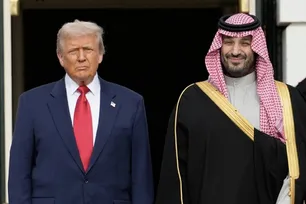 Trump says Mideast allies have reached outlines of deal to end Iran war, says US to stop new strikes
Comment



Most Read
- 1 ‘Arab voice doesn’t count’: Jewish Israeli blocs reject Palestinian support
- 2 DC and Virginia sue to block Trump arch construction
- 3 Multiple tankers and drone reported struck around Hormuz
- 4 France's third weekend of social protests sees lower turnout and early clashes in major cities
- 5 Patrick Stewart, ‘Star Trek’ Captain Picard and ‘X-Men’ actor, dies at 86